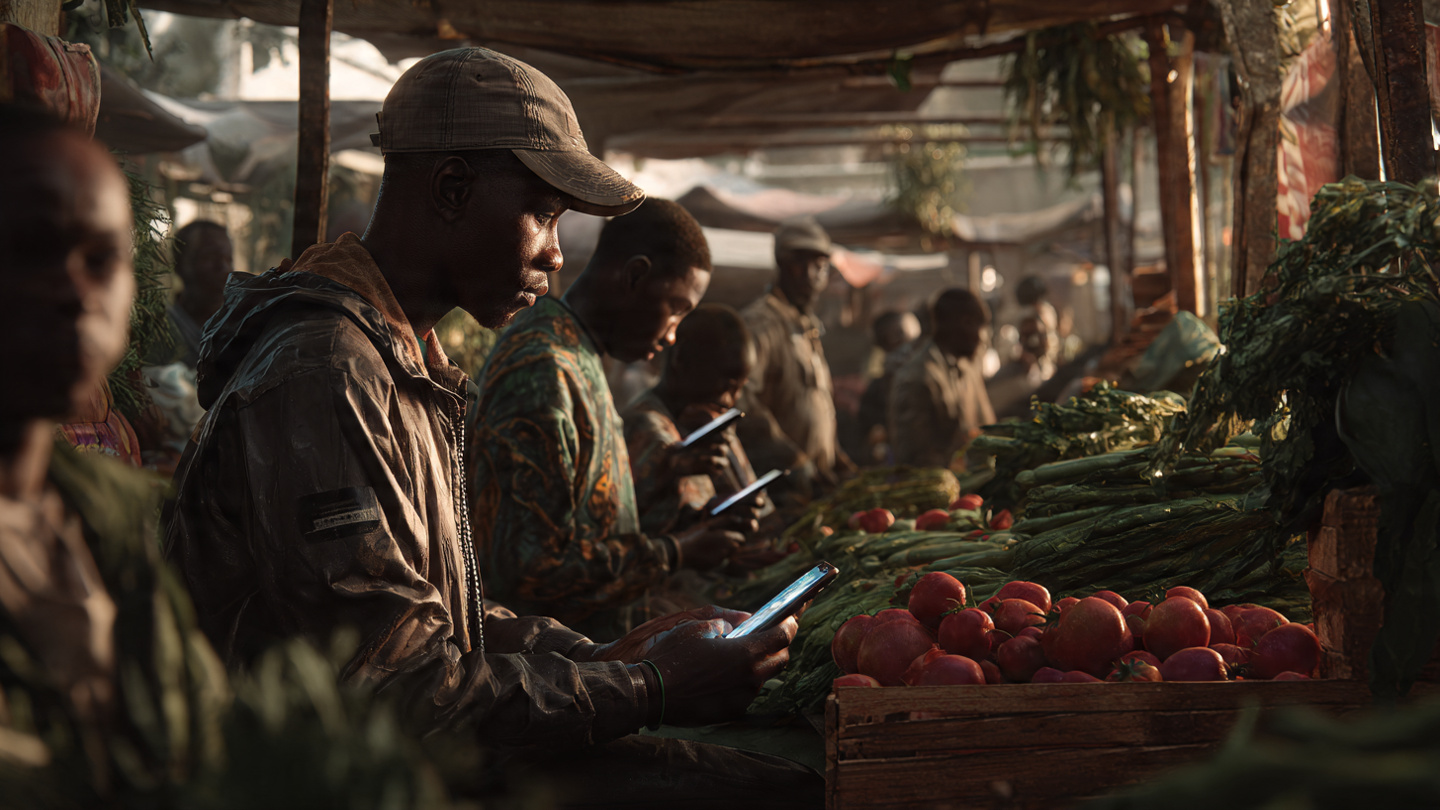
Beyond Tech Hubs: AI in Everyday African Life
When most people think about AI's impact in Africa, they imagine tech startups in Nairobi's Silicon Savanna or Lagos' growing innovation ecosystem. But the real AI revolution isn't happening primarily in conference rooms or co-working spaces. It's happening in hospitals struggling with limited diagnostic capacity, on farms facing unpredictable weather patterns, in rural villages lacking access to financial services, and on roads where transportation infrastructure is rapidly evolving. AI is quietly transforming how millions of Africans live, work, and access opportunity.
Healthcare: AI as Diagnostic Equalizer
Democratizing Medical Expertise
Rural hospitals across Kenya and East Africa face a critical shortage of specialists. A village clinic in Kisumu might have a single nurse managing maternal health for thousands of patients, with the nearest trained obstetrician hours away by car. AI-powered diagnostic systems are changing this equation. Machine learning models trained to detect diabetic retinopathy, tuberculosis, and cervical cancer from mobile phone camera images enable early detection in remote clinics. Community health workers, equipped with simple AI applications, provide screening capabilities that rival specialist clinics.
Predictive Health Infrastructure
Disease prediction models are helping African health ministries allocate limited resources more effectively. By analyzing historical disease patterns, climate data, population movement, and vaccination rates, AI systems predict malaria outbreaks weeks in advance, enabling preemptive resource deployment. During the COVID-19 pandemic, African researchers used AI to optimize vaccine distribution logistics-not because Africa had unlimited resources, but because resource scarcity made optimization absolutely critical.
Agriculture: AI for Climate Resilience
Precision Farming in Resource-Constrained Environments
Climate change is making African agriculture increasingly unpredictable. Traditional farming wisdom developed over generations becomes unreliable when rainfall patterns shift. AI systems analyzing satellite imagery, soil sensors, and weather data help smallholder farmers in Kenya's Rift Valley make precise irrigation decisions. Rather than irrigating uniformly (wasting precious water), AI models predict exactly where and when plant stress will occur, enabling targeted interventions with minimal water consumption.
Crop Disease Detection & Pest Management
A farmer in Uganda can photograph a diseased crop leaf on a mobile phone, and within seconds, receive an AI diagnosis recommending specific interventions. Computer vision models trained on thousands of diseased plant images identify armyworm infestations, fungal infections, and viral diseases. This enables rapid response-the difference between an isolated problem and a crop-wide catastrophe.
Finance: AI Enabling Financial Inclusion
Credit Scoring Without Traditional Credit History
In Kenya, over 90% of the population lacks traditional credit history or collateral. Banks can't assess lending risk using conventional models. AI changes this paradigm. Alternative credit scoring systems analyze mobile money transaction patterns, utility payments, and social network data to assess creditworthiness. Suddenly, a small business owner in a Nairobi informal settlement can access credit-enabling expansion, hiring, and wealth creation previously impossible.
Fraud Detection at Mobile Speed
Mobile money platforms like M-Pesa process billions of transactions annually. AI fraud detection systems flag suspicious patterns-unusual transaction amounts, geographic anomalies, timing patterns-in real-time, protecting vulnerable users from sophisticated scammers while maintaining the frictionless user experience that makes mobile money so powerful.
Transportation: Autonomous Systems and Road Safety
Data Annotation: Training Tomorrow's Autonomous Vehicles
As autonomous vehicle technology matures, AI systems need to understand driving patterns specific to African roads. Unpredictable traffic, diverse vehicle types, pedestrian behavior, and weather conditions create unique challenges. Annotation teams across Africa are labeling LiDAR data from African roads, creating training datasets that capture the complexity of African driving environments. This isn't just about technology transfer-it's about ensuring autonomous vehicles built for African conditions.
Road Safety Through Computer Vision
Traffic enforcement agencies are deploying AI-powered computer vision systems to detect speeding, reckless driving, and traffic violations. In Kenya, where traffic accidents claim thousands of lives annually, AI-assisted enforcement is changing driver behavior and saving lives.
The Challenges: Data Privacy and Equitable AI
As AI systems increasingly mediate access to healthcare, credit, and opportunity in Africa, critical questions emerge about data privacy, algorithmic bias, and who benefits from AI innovation. African governments and civil society organizations are increasingly demanding that AI systems be developed with transparency, that biases be identified and corrected, and that economic benefits flow to African communities rather than extractive foreign corporations.
The Path Forward: African-Led AI Innovation
The most exciting AI developments in Africa won't come from copying Silicon Valley models. They'll come from African innovators solving African problems-using AI to address healthcare gaps, climate challenges, and financial exclusion in ways that reflect African context and values. This requires investing in African talent, supporting African research institutions, and building sustainable African companies that keep innovation benefits local.
← Back to Blog